
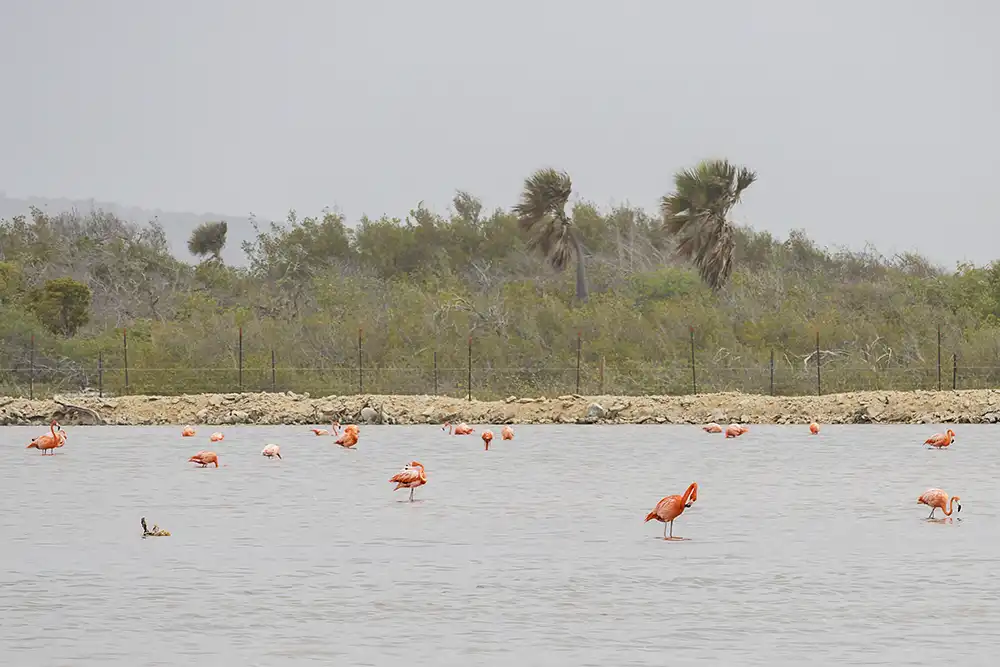


In the south of Bonaire lies a still relatively undiscovered nature area where hiking is a true pleasure: the Bonaire Sabal Palm Park. This protected area is the only place in the world where the Sabal Palm (Sabal lougheediana) grows in the wild. Along the rugged limestone landscape, you will not only encounter these distinctive trees, but also see hundreds of flamingos standing in the Pekelmeer. The park has three official hiking trails, and we have added a fourth that takes you past all the highlights.
Sharing Island Love
Thank you for your interest in our beautiful island in the Caribbean! We love sharing our passion for Bonaire with everyone – locals, visitors, and of course, with our guests during Our tours. Curious how we do that? You can find all the details in Sharing Island Love.
With Island Love,
Would you like to visit more of these rugged, off-the-beaten-path spots during your vacation? On Our tours, you will be well away from the crowds!
The text continues below…

The Sabal Palm
The Sabal Palm (kabana in Papiamentu) is one of the rarest trees in the world. This sturdy palm tree, with its compact, rounded crown, reaches no more than about seven meters (23 feet) in height and grows exclusively in the wild on Bonaire, in the limestone plateau near Lima in the south of the island. But the park is home to more rare species than just the Sabal Palm, such as the West Indian Satin Wood (Zanthoxylum flavum).
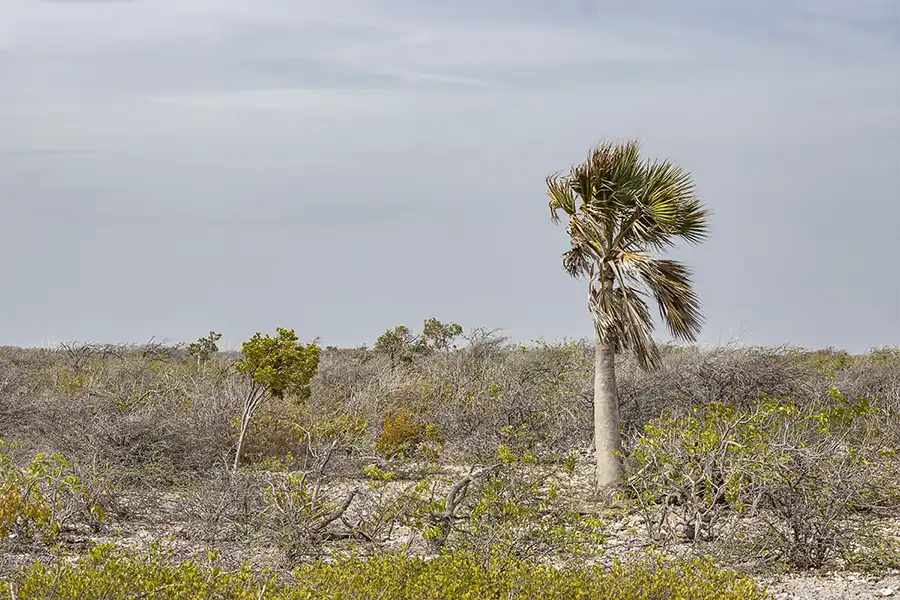
The small habitat makes the species vulnerable. In the wild, fewer than 20 mature specimens remain, and since 2023 an average of two have died per year. The Sabal Palm grows slowly and only produces seeds once mature. In the wild, this can take up to 30 years. The largest palms in this area are over 100 years old.

Goats and donkeys are therefore not welcome within the park’s fencing: they eat the young seedlings before they get a chance to grow, and the already harsh conditions on the island, drought, salty soil and the constant wind, make recovery no easier.

To protect this palm, the Bonaire Sabal Palm Park was established in 2025 at the initiative of nature organization BonBèrdè Along the hiking trails, information boards tell visitors more about the palm, the geology of the area and the broader ecosystem. In this way, the park combines nature conservation with recreation and education.
The text continues below…

Research
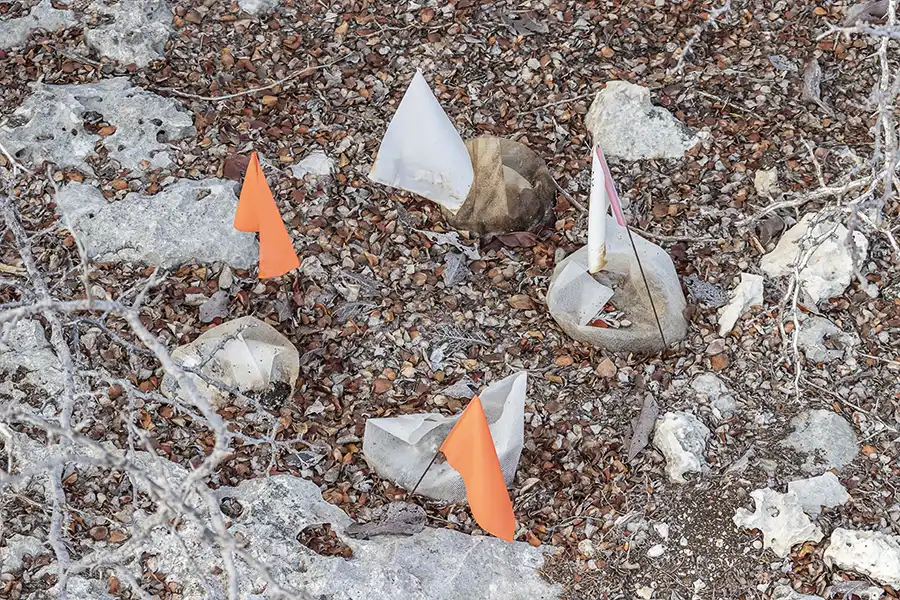
Nature conservation alone is not enough to save the Sabal Palm. BonBèrdè conducts DNA research on Sabal Palms in gardens across Bonaire, to understand how these relate to the wild population. The park also has so-called seed bombs: small bags of biodegradable material filled with Sabal Palm seeds and compost. They protect the seeds from sun and wind until rainfall allows them to germinate. By monitoring these locations, researchers study the early growth of young palms while at the same time working to increase the wild population. Klein Bonaire has a similar landscape. Hundreds of Sabal Palms have been planted there.
Hiking in the Bonaire Sabal Palm Park
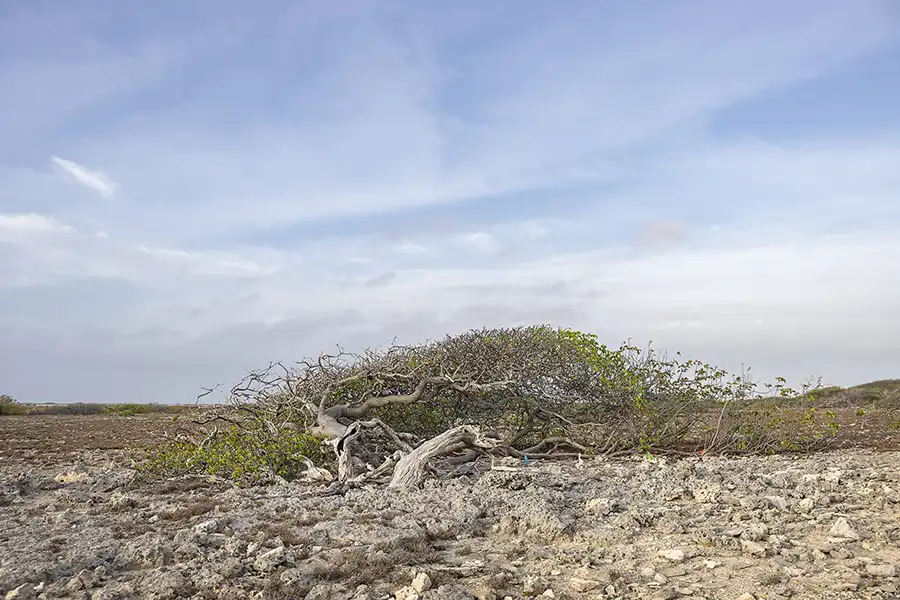
The limestone landscape is uneven and calls for sturdy hiking shoes. After rainfall, parts of the trail can become muddy. Visiting in the dry season? The landscape may look bare, but it is far from boring. Sturdy native trees make the landscape worth exploring. The area is also rich in birdlife: in addition to the hundreds of flamingos in the Pekelmeer, you will spot other beautiful birds along the way, such as plovers and flycatchers. If you would like to explore this area on a Guided hike, we will definitely bring our binoculars! And if you head out unguided, be sure to read our Helpful hiking tips first.

The park has three official trails, each different in length and character. The landscape of the park is fairly exposed. Those looking for shade will find little here.
The three trails can easily be combined for those with more time who enjoy longer hikes. At the bottom of this blog we offer a suggestion for an 8 km (5 mile) route that takes you past all the highlights.
Park Rules
To protect the vulnerable nature, a few simple rules apply in the park. Leave dogs, goats and donkeys outside the park. Stay on the marked hiking and cycling paths, do not enter fenced areas and do not touch trees or plants. Make sure you carry enough water, protect yourself from the sun and take your litter with you.
Explanation of trails and rating
Three types of trails:

Difficulty rating:
* Walk on accessible, flat terrain.
** Walk on accessible, gently sloping terrain or uneven ground.
*** Walk on sloping terrain.
**** Walk on sloping terrain, with occasional short climbs.
***** Challenging walk on steep terrain, requiring frequent climbing.
The length of the walk is not taken into account when determining the difficulty level.
The Sùit Route

The Sùit Route, marked with blue rocks, is the longest trail in the park. That makes this route somewhat more demanding than the other two. The route is divided into two loops, A and B on the map. In loop A, you pass low-lying areas in the landscape where temporary ponds form during the rainy season. These briefly attract ducks, iguanas, bats and insects. In the dry season, they quickly disappear.
Between the two loops you will find a concrete pillar that served as a cadastral point, and is also the highest point in the park. From here, you have an open view over the entire area. Near this pillar you will also find the shortcut to shorten the route, and within a fenced section the eastern palm population. These young palms are crucial for the survival of the species. In the future, the easterly trade wind can carry seeds from here further into the park.
The second loop (B) is well worth the effort, as it runs almost entirely along the north side of the Pekelmeer where the flamingos stand.
Practical information:
Difficulty: **
Length: 5.6 km (3.5 miles), loop trail, with a shortcut halfway to shorten the route.
Parking area and starting point along the paved road.
Can be combined with: Scenic Route to the Salt Pans, a visit to Sorobon, and the other routes in this park.
The text continues below…

The Brasia Route
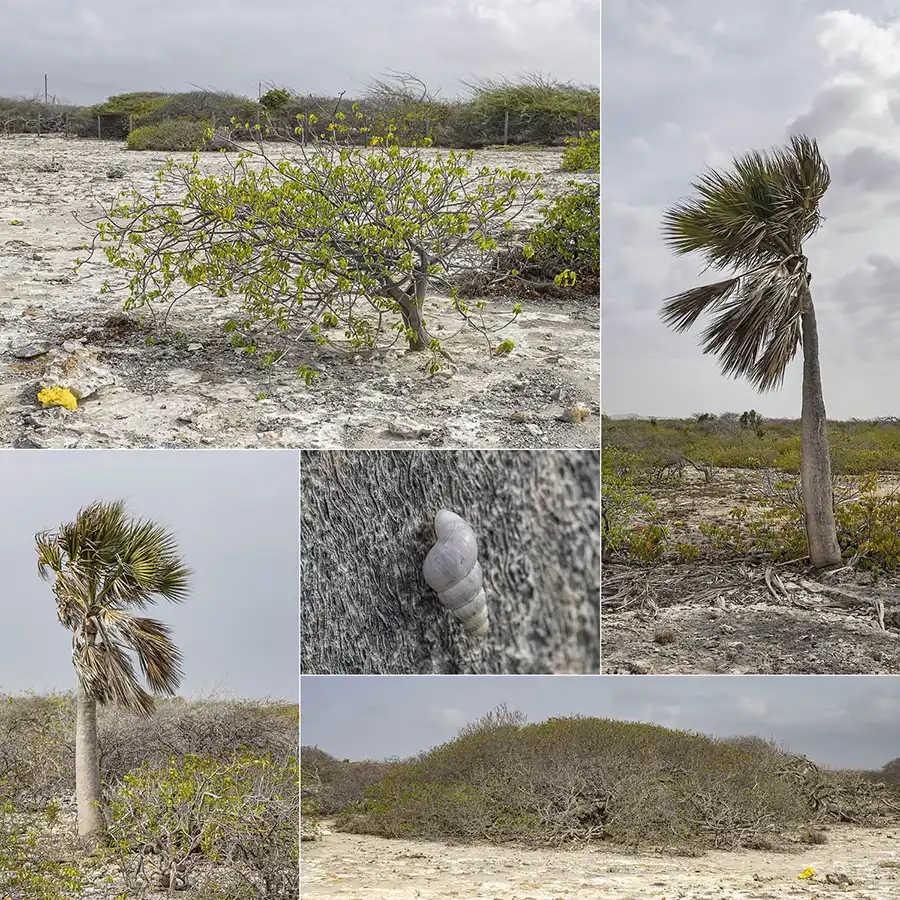
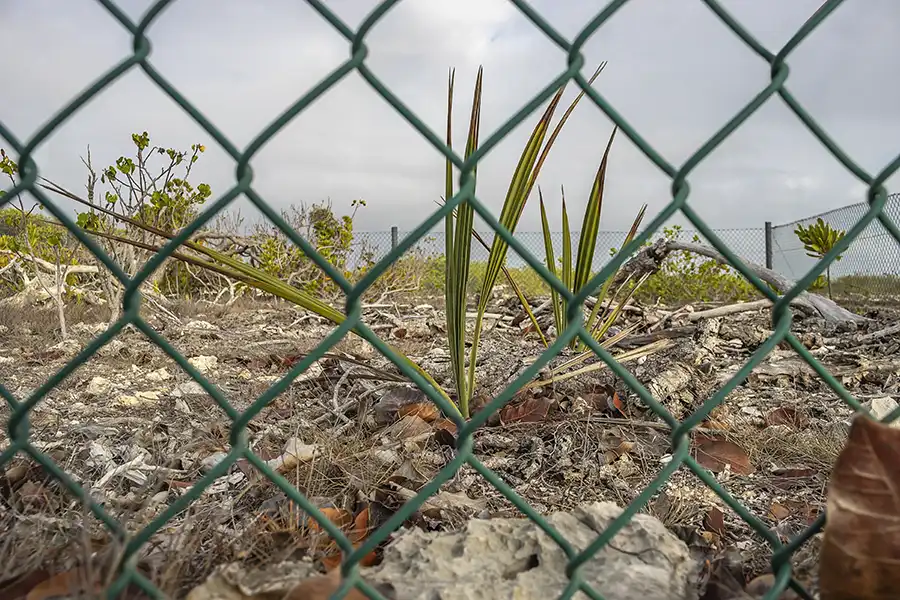
The Brasia Route, marked with yellow rocks, is largely made up of a winding, playful path that draws you into the landscape. The vegetation here is denser and more varied than on the Sùit Route. Halfway along the trail stands a mature Sabal Palm right beside the path. At the base of the palm, young specimens are growing, recognizable as a cluster of green shoots. A little further on you will find a second mature specimen.
Practical information:
Difficulty: **
Length: 3.5 km (2.2 miles), loop trail
Parking area and starting point along the paved road.
Can be combined with: Scenic Route to the Salt Pans, a visit to Sorobon, and the other routes in this park.
The Kabana Route
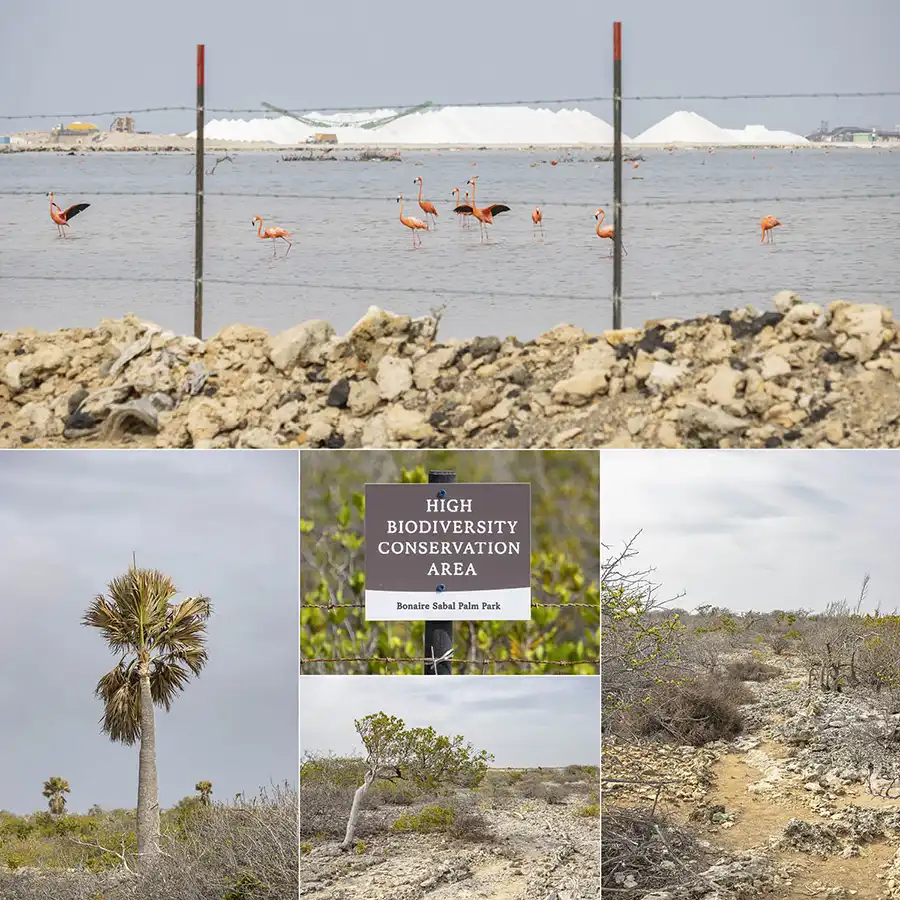
The Kabana Route, marked with green rocks, lives up to its name: the trail runs along the western palm population and is therefore the richest hike when it comes to Sabal Palms (kabana in Papiamentu). The path is mostly long and straight, with a small loop at the end along the fenced High Biodiversity Conservation Area. This part of the park has been fenced since 2021. At the start of the loop, you also have a beautiful view of the flamingos in the Pekelmeer.
Along the way, you will see goats grazing on the other side of the fence, precisely the reason the fencing is there.

Practical information:
Difficulty: **
Length: 5.2 km (3.2 miles), out-and-back trail (with a short loop)
Parking area and starting point along the paved road.
Can be combined with: Scenic Route to the Salt Pans, a visit to Sorobon, and the other routes in this park.
Hike All the Highlights
Would you like to see the best of the park in a single hike? Then our Highlights route is the answer. You will pass both palm populations, the eastern and the western, visit the lookout point and have plenty of views of the flamingos in the Pekelmeer along the way.

Our Highlights route, step by step:
- From the parking area, follow the blue stones of the Sùit Route, but walk past the actual start of the Sùit Route.
- After taking in the flamingos, take the shortcut at the cadastral pillar and the eastern palm population and follow the “Exit” sign.
- After about 400 meters (a quarter mile), you will find the start of the yellow Brasia Route on your left. Follow the yellow stones.
- At the end of the path you will reach a T-junction. Leave the yellow stones there and turn left to follow the green stones of the Kabana Route.
- After the small loop along the western palm population, follow the green and then the yellow-green route back to the parking area.
Practical information:
Difficulty: **
Length: 8 km (5 miles), loop trail
Parking area and starting point along the paved road.
Can be combined with: Scenic Route to the Salt Pans and a visit to Sorobon.
MTB Route
Not into hiking? The park also offers a dedicated mountain bike route running through the heart of the park, connecting the walking trails and allowing MTB enthusiasts to combine sections and create their own adventure. The flat but rocky terrain is ideal for mountain biking, and the scenic landscapes make every ride worth the effort.
About us: A tour with HopiBonaire
A tour with HopiBonaire is more than just a ride around the island. Join us to discover both the well-known attractions and the hidden gems Bonaire has to offer. During our tours, we make sure to set aside time for a lovely walk, but even if you’re not a fan of walking, you’re in the right place. We tailor the program to your preferences and interests, ensuring you get the most out of your experience and can fully enjoy the island’s beauty!
Read more?











